miércoles, 12 de marzo de 2014

La melancolía como arte: Saima Harmaja y Helene Schjerfbeck

Durante el siglo XIX las corrientes artísticas finlandesas -en especial el romanticismo- se desarrollaron gracias al nacionalismo, mismo que fue estandarte de los artistas románticos. Con la llegada de la independencia finlandesa, llegaron momentos difíciles para el país: la ruptura de la sociedad en dos facciones y la consecuente guerra civil, misma que trajo un ambiente de "no futuro" para los finlandeses.

Esta melancolía, desolación y tristeza se vieron reflejadas en las obras de los artistas de la primera mitad del siglo XX. En ésta entrada se tratará de hacer un análisis de algunas obras de dos finlandesas poco conocidas fuera del ámbito europeo y que tienen varias cosas en común: la primera artista es la poetisa Saima Harmaja; la segunda es la pintora Helene Schjerfbeck.

¿Por qué ellas dos? La primer razón es que a ambas son contemporáneas; la segunda razón es que en la entrada anterior analicé obras de artistas masculinos y la tercera es la tesis de esta entrada: ambas artistas tuvieron vidas trágicas y eso, aunado al contexto político de Finlandia, provocaron que Saima y Helene representaran la melancolía en sus obras.

Saima Harmaja


Saima Rauha Maria Harmaja nació el 8 de mayo de 1913 en Helsinki, ciudad donde vivió hasta su muerte el 21 de abril de 1937. Hija del maestro en filosofía Leo Harmaja y de la también maestra en filosofía Laura Harmaja, mostró desde pequeña aptitudes para la poesía.

A muy corta edad Saima fue atacada por la tuberculosis; enfermedad que mermaría su salud toda su vida. Es en este estado, en el que su actividad literaria se hace más intensa y en sus obras se refleja el deseo por sanar o morir de una vez por todas.[1]

Fue la segunda de cuatro hijos. Saima provenía de una familia importante: su abuelo fue el senador finlandés Arvid Genetz, quien destacó por poemas de corte nacionalista como Herää Suomi (Despierta Finlandia), Karjala (Carelia) y Väinölän Lapset (Los hijos de Väinölä).[2] Y la mayoría de sus hermanos y tíos son conocidos por sus escritos, poemas y obras de arte.

Saima, siguiendo el deseo de su padre, estudió filosofía en la Universidad de Helsinki, sin embargo, su pasión por la poesía la llevaron a abandonar la carrera y comenzar con su carrera como poetisa, publicando en 1932 su primera obra.[3]


 Su carrera como poetisa se inició tardíamente, sin embargo lo prolífico de su carrera y el talento del cual estaba dotada, la llevaron a publicar tres libros de poemas y una obra póstuma que publicó su madre conteniendo cartas para sus amigos, así como un diario en el que podemos penetrar a lo más profundo de sus pensamientos.

Helene Schjerfbeck


Helena Sofia Schjerfbeck nació en Helsinki el 10 de julio de 1862, esta pintora es una de las pioneras del modernismo, corriente por la cual es mejor conocida. A la edad de cuatro años sufre una lesión en la cadera, misma que la marca de por vida. Gracias al gran talento pictórico que poseía, ingresó a la Escuela de la Sociedad Finlandesa de Arte a la edad de 11 años. Cuatro años más tarde en 1877, ingresa a la escuela privada Adolf von Becker, donde permanece un año.[4]

A diferencia de Saima Harmaja, Helene no provenía de una familia importante, por lo que sus estudios los tuvo que financiar por medio de becas. Fue gracias a estos apoyos que Helene tuvo la oportunidad de viajar a París para continuar con sus estudios.[5] Fue aquí donde comenzó el reconocimiento internacional, con su obra La Convaleciente, misma que la llevó a ganar la medalla de bronce en la Exposición Universal de París 1n 1889.[6]

La carrera de Schjerfbeck la ha llevado a ser una de las artistas más importantes del modernismo finlandés, con obras que con el paso de los años van perdiendo detalle y comienzan a ser más abstractas. Y es que es tan importante para los finlandeses que en el 2012 el país conmemoró los 150 años de su nacimiento con una moneda de 2 euros que contiene uno de sus tantos autorretratos.


Al final de su vida Helene tuvo que mudarse constantemente debido a la Guerra de Invierno y a los posteriores conflictos bélicos, finalmente en 1944, decide mudarse a Suecia donde permanece hasta su muerte el 23 de enero de 1946.

La melancolía del arte

Para encontrar puntos de encuentro entre ambas artistas es indispensable conocer las obras elegidas, ambas hablan de enfermedad, ambas transmiten esa esperanza de poder mejorar o de encontrar esa paz interior.

Ambas artistas se preocupaban por retratar el paisaje, retratarse a ellas mismas y sobre todo de retratar su casa. Y es que ambas artistas se autorretrataban, Saima ocupaba las palabras y Helene ocupaba la pintura.

Tanto en la pintura La convaleciente de Helene Schjerfbeck, como en el poema de Saima Harmaja podemos ver la añoranza por la salud, esa añoranza por poder descansar y es que pareciera que ambas sostenían una lucha contra sus demonios internos o contra las enfermedades que las aquejaban.

Enferma (fragmento)[7]
Estrellas pequeñas y dolientes
Miran hacia la ciudad.
Hoy estoy muy cansada
Mi dolor a la tranquilidad.

Una vez, hace mucho
Tuve un sueño ardiente.
En el cielo aletearon las estrellas
Encima de mi volante.

Eso estaba muy lejano.
Ahora sólo rezo,
Porque hoy pueda
Dormir un poco.

Sin embargo en ambas obras se puede ver ese reflejo de paz, Helene representa a una niña pequeña, que bien pudiera ser ella, que se encuentra enferma, no obstante ésta enfermedad no aparece en el ser de la niña como un ente oscuro, es decir, la pequeña se ve radiante, no se le mira demacrada. Bien pudiera ser la referencia a la lesión de cadera que la afectó.


A lo largo de las obras, ambas artistas se van separando, Saima Harmaja se mantiene en una línea melancólica, oscura, pero al mismo tiempo con rayos de esperanza, escribiendo acerca de su tierra, una tierra que en invierno es oscura y fría, pero que en verano es luminosa y cálida. Helene Schjefberck cambia su estilo, deja a un lado esa enfermedad, puesto que “su gran pasión siguió siendo pintar al prójimo, su espíritu y su carácter.”[8]

Para finalizar, puedo concluir que ambas artistas tuvieron muchas cosas en común, fue una enfermedad y un talento innato lo que las llevó a tener una carrera prolífica; ambas en su estilo, ambas teniendo en cuenta algo que es importante para el carácter finlandés: la libertad y el contacto con la naturaleza, pero asimismo, esa melancolía que caracteriza a los finlandeses y es que así son, justo como lo mencioné arriba: Finlandia es una tierra que en el invierno es oscura y fría, pero en verano es luminosa y cálida.


[1] Petri Liukkonen, Saima (Rauha Maria) Harmaja (1913-1937), (DE 11 de diciembre de 2013 3:45 p.m., en http://www.kirjasto.sci.fi/harmaja.htm)
[2] Estos poemas los escribió bajo el nombre de Arvi Jännes.
[3] S.A., Harmaja, Saima (1913 – 1937), (DE 11 de diciembre de 2013, 4:57 p.m., en http://www.kansallisbiografia.fi/kb/artikkeli/5582/)
[4] S. A., Helene Schjerfbeck (1862-1946), (DE 12 de marzo de 2014, 5:54 p.m., en http://www.uv.es/capelo/Helene_Schjerfbeck.html)
[5] Barbara Wells Sarudy, Woman Artist – Helene Schjerfbeck (1862-1946), (DE 12 de marzo de 2014, 6:00 p.m., en http://bjws.blogspot.mx/2010/08/another-woman-artist-helene-schjerfbeck.html)
[6] S.A., Helen…, op. cit..
[7] SaimaHarmaja, ”Sairas”, en Huhtikuu, Porvoo, WSOY, 1932, p. 13, (Traducción del finés por Anahí Sandoval Ramos).SAIRAS I Pienet ja kärsivät tähdet/katsovat kaupunkiin./Olen niin väsynyt tänään/tuskiini hiljaisiin./Kerran, kauan sitten/palavaa unta näin./Taivaalla hulmusi tähdet/ylleni syöksähtäin./Siitä on liian kauan./- Nyt minä rukoilen/vain, että tänään saisin/nukkua vähäsen.
[8] S.A., Helene…, op. cit.

miércoles, 6 de marzo de 2013

We-Land: 100 innovaciones sociales de Finlandia.

"En el mundo existen dos clases de personas: los I-landers, personas que sólo hablan de yo, yo, yo y los We-landers, personas que hablan de nosotros, y Finlandia es "We-land"."

Dr. Ilkka Taipale

Con estas palabras comenzó la presentación del libro titulado 100 innovaciones sociales de Finlandia del Dr. Ilkka Taipale; y bueno cuando conoces a un país de la manera en que conozco a Finlandia, sabes que las palabras del doctor al inicio de la conferencia son ciertas y no te queda de otra más que asentir firmemente con la cabeza.

No obstante, cuando conoces a tu país de la misma manera no hay más que preguntarte ¿por qué México no puede alcanzar el mismo nivel de desarrollo que Finlandia si tenemos más recursos naturales, si nuestra posición geográfica es privilegiada, si tenemos más población, etcétera?


Bueno, las respuestas quizá se encuentren en este libro y probablemente podamos aplicar algunos de los métodos que éste país nórdico utiliza para mejorar la calidad de vida de sus habitantes y ser uno de los países más desarrollados del mundo. El libro maneja cinco cuestiones en cuanto a la innovación y a grandes rasgos contaré de lo que se habló en la presentación.

Educación

El primer punto del que el doctor habla, es la educación. El sistema educativo finlandés es actualmente uno de los mejores del mundo, de acuerdo con PISA, sin embargo ¿qué hace tan especial este sistema? La primera característica es que todos los niños tienen las mismas oportunidades de estudiar hasta dónde cada estudiante quiera y además todos, absolutamente todos cursan el nivel básico.

Sí, esto también se ve en nuestro país, pero la diferencia radica en que los peores estudiantes son los mejores, es decir, los niños con mayores problemas de aprendizaje son a los que más atención se les presta; aunando a que no hay calificaciones en los cursos, ya que no se busca fomentar la competencia entre los estudiantes, sino que realmente se aprenda, un punto a favor si se toma en cuenta que la autoestima del niño se ve afectada al verse comparado con el mejor de la clase a través de unas cifras numéricas. Por lo que la educación finlandesa está basada en la solución de problemas, es importante saber el resultado, pero es más importante saber cómo llegar a ese resultado.


Otra de las características del sistema educativo finlandés es el hecho de que la educación es verdaderamente pública y las escuelas privadas se cuentan con los dedos de una mano, por lo que los padres no tienen que preocuparse por solventar los gastos académicos de sus hijos, ya que éstos corren por cuenta del Estado.

Igualdad de género

Siempre que se habla acerca de la igualdad de género se nos viene a la mente los derechos de la mujer y el trato con los varones, sin embargo, pocas veces se habla del derecho que los hombres tienen de realizar tareas femeninas. Esa es otra de las innovaciones del sistema de bienestar finlandés: los padres tienen el derecho-oportunidad o como se le quiera llamar de compartir con su mujer los primeros meses de vida de sus hijos. Todos los hombre gozan de “incapacidad” al momento del nacimiento para poder convivir con su mujer y el recién nacido.

Esto nos habla de una verdadera equidad de género, ya que se le da al hombre el mismo valor que a la mujer, además de que a los hombres les gusta apoyar a sus mujeres en las tareas del hogar y sobre todo en la educación de los hijos. Dicho sea de paso, esta igualdad se vio a lo largo de la presentación, ya que si bien el autor es el Dr. Taipale, su mujer Vappu Taipale también tuvo un papel activo dentro de la misma.

Dra. Vappu Taipale

Siguiendo con la cuestión de la equidad de género, Finlandia fue el primer país europeo en otorgar el sufragio universal, o sea el voto a las mujeres, además de que podían ser elegidas. Actualmente la mujer tiene un 50% de los cargos públicos incluido el Parlamento.

Además de las cuestiones políticas, las mujeres tienen presencia en todos los rubros del país, desde la medicina, hasta la ingeniería, pasando por la tecnología y la educación. A diferencia de nuestro país en donde las mujeres ganan menos que los hombres, en Finlandia los salarios son iguales para todos y si una mujer llega a ganar más que el hombre es porque tiene otros trabajos.

Sociedad civil


¡Tremenda sorpresa se lleva uno al enterarse de las sociedades civiles y organizaciones no gubernamentales finlandesas! La sociedad civil finlandesa (al igual que todo el país) es fuerte y la gente tiende a participar dentro de estas sociedades y organizaciones, haciendo de la finlandesa, una sociedad preocupada por los demás con ONG's que van desde la ayuda para los niños con problemas de aprendizaje hasta la ayuda a personas con problemas de drogadicción.

Sin embargo, no todo es color de rosa en Finlandia y el alcoholismo sigue siendo un problema, el "vicio nacional", ocupando las palabras del Dr. Taipale y es por eso que la mayor parte de las organizaciones no gubernamentales están orientadas en ayudar a hombres y mujeres con problemas con el alcohol. Mucho se ha hecho para combatir, los resultados existen, sin embargo, éste es y ha sido un problema difícil de combatir.

Un aspecto importante de las ONG's y los políticos es que, todos los funcionarios públicos deben pertenecer a alguna organización para poder ingresar dentro de la vida política de Finlandia, si eres electo senador tienes que pertenecer a alguna ONG, es más, ni siquiera puedes ser votado si no estás ayudando a los finlandeses de manera real.

Y no sólo los políticos y funcionarios públicos, también los casinos, casas de apuestas, etcétera, pertenecen a Organizaciones, por lo que las ganancias de éstas actividades lúdicas no se van a los bolsillos de empresas privadas, si no que se donan a causas que benefician a la población en general, las casas de apuestas únicamente deciden a quién van a donar sus ganancias, interesante ¿qué no?

Entrados en el tema de la política es importante mencionar que todos los partidos políticos participan en la toma de decisiones y la elección de los senadores se hace de manera proporcional, así que ningún partido tenga la mayoría absoluta.

Corrupción

Excma. Embajadora Anne Lammila

Difícil hablar de éste tema cuando México es uno de los países más corruptos. Sin embargo ¿cómo le hizo Finlandia para erradicar éste mal que tanto afecta a nuestro país? Bueno, primeramente el Dr. Taipale nos confesó que sí, en Finlandia también hubo corrupción, pero se logró erradicarla legislando para que las personas corruptas fueran castigadas.

El principal aspecto para combatir la corrupción es la rendición de cuentas, todos los ciudadanos tienen que declarar impuestos, mismos que se cobran equitativamente, es decir, los más ricos son los que más impuestos pagan, mientras que los que menos tienen pagan menos, haciendo con esto una sociedad más justa y más honesta.

Los castigos para la gente que intenta sobornar a un policía, un funcionario público, etc., consisten en penas de cárcel que van desde los 7 años y sin derecho a fianza. Y sí, el policía tiene la obligación de llevarte ante un juez si le ofreces cualquier cantidad de dinero. Radical o no, lo cierto es que les ha funcionado y bastante bien.

Finalmente…

¿Pues qué resta decir? Simplemente no creo que sea imposible alcanzar un nivel de desarrollo tal como el de Finlandia, pero siendo sinceros, tenemos mucho que limpiar y mucho por hacer, quizá algún día lo logremos, pero mientras no nos caería nada mal darle una leída a este libro, éste blog es sólo un esbozo de lo que son las innovaciones que han hecho del Finlandia, lo que es en la actualidad. Si estás interesad@ en el libro, puedes llamar a la embajada de Finlandia en México solicitándolo o enviando un correo a sanomat.mex@formin.fi


Gracias a Vianey Banda por las fotos.

martes, 5 de marzo de 2013

Grand Duchy of Finland 2° part

Second part: romanticism and Finnish nationalism

Finnish identity

Like in the whole Europe, the XIX Century was characterized by the revolutions and the affectation of these on the arts, besides an ideology was created to help subjugated nations to obtain their independence and Finland was one of this nations. During the second half of 19th century, the University of Helsinki was cradle of great painters, writers, poets and musicians that would developed the Finnish romanticism; those artists searched to create artworks and define an own identity, something that characterized them as Finns.

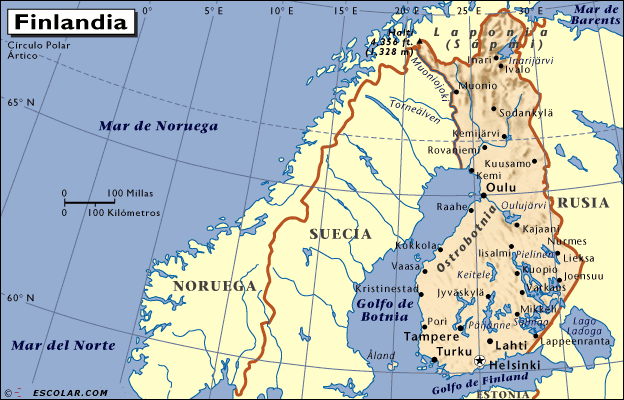
To start with the Finnish identity it’s necessary to set the country geographically: for Ángel Ganivet, Finland is in disadvantage because of its geographical position, since on the right it has to the “Colossus of the North” (Russia) and on the left it has the lion that pounce over Europe (Sweden),[1] but for me this is not a disadvantage, but the opposite, because Finland can be influenced by the occidental culture represented by Sweden and by the oriental culture by Russia, having a melting pot of cultures and a combination of them that make of Finnish culture, an unique one.


The “russification”

Due to the huge attributions that Finland had inside the Empire, the nationalists Russians started to criticize this situation, also the relation that the Duchy had with the rest of Europe.[2] This had as consequence the first period of russification; in this period, Russia tried to attract the Great Duchy to the influence sphere, that caused a confrontation between the Finnish elite and the Russian government.[3] In 1899 tsar Nicholas II started an attack against Finnish sovereignty, that wouldn’t stop until 1905,[4] with the dissolution of its army, the establishment of Russian as an official language, just as the decrease of the Finnish Diet power and at last the repression.[5] This brought with it the disappearing of the privileges and customs, under the slogan of smoothness and russification of the territories.


National painting, literature and music

The painting as a mirror of nationalism

Along the 19th century painting played an important role to the develop of nationalism; Albert Edelfelt was a very important representative of this art, his capital work is the portrait of Louis Pasteur, demonstrating with this the importance that Finland had on the European sphere. Nevertheless on his works we can see the leading nationalism in the country at the end of the century, as is viewed on the painting Paris in the snow, where the Parisian landscape is mostly alike a Finnish one, on the work snow plays an important paper and we can see it even on the name, an artwork where the buildings viewed aren’t typical from Paris and the landscape could be a city inside the Nordic country. I can’t talk about the representative monument of Paris, because when Edelfelt painted this artwork, the Eiffel tower was in the beginning of its building.

Is in this period where the first factories start to come to Finland and once again, this is seen on the painting because of the economic-industrial development of the country, and also it’s the start of the first nationalist signs, same that were shown in every possible way.


Another figure on the Finnish romanticism is Akseli Gallen-Kallela, with the frescos that he painted about Kalevala, the Finnish epic poem, those artworks are colossal, and not only because of the size but for the technique and nationalism, because even for the topic those are nationalist artworks. Inside these pieces passages of Kalevala can be viewed, that represent the fight of Finns against Russians, the first fighting fo their independence and the second defending their interests. This painting is The defense of the Sampo (Sammon puolustus).


Another pictorial piece where this fight is seen is The attack (Hyökkäys), where the theory of nationalities is there, here the painter expressed Finland as a beautiful lady being attacked by a two-headed eagle, the same that represents the Russian Empire. In this work is illustrated in a clear and direct way the trying to russification by the empire, and the protest was loud and clear.


With their works “Finns wanted to show also through their art that Finland could have an independent existence in the concert of the European nations.”[6] And this was reflected on the Universal Exposition, which took place in Paris in 1899, where Finland was welcomed in its exclusive pavilion. There the country “emphasize its own nature and its definition in relation with Russia caused some conflicts […] the pavilion and Finland’s art caused an important political attention, in whose background was the institutional conflict between Russia and Finland.”[7] Along this period Finland started to have a more active role inside the European continent.


Kalevala

One on the first nationalist-romantic demonstration is Kalevala, the Finnish epic poem; according to Ángel Ganivet this creation is the most important of the Finnish nationalism,[8] and he has right because this is the world view of a subjugated people, this is the origin of the population, is the fight between men and inhumane weather predominant in Finland. The first edition of the book was in 1835 and it was conformed by about 5,000 verses and in 1849 was edited definitely, con more that 23,000 verses, gathered in 50 chants.[9]


This series of ancient chants were compiled by a medic named Elias Lönnrot, who spent a long time of his life going through the Karelian zones hearing and taking notes of all the poems, these would get a capital importance, because with the Kalevala the existence and specific character of the Finns will be known.[10]


Nevertheless, “what made Kalevala so meaningful wasn’t its content and language but the fact that Finns were capable to realize such a cultural achievement.”[11] And this is right, because Finland was subjugated so much time and besides it had a significant impact on the language, considering that after the publishing of the book, J. V. Snellman, demanded the establishment of Finnish language as the one of the administration and culture, which meant a compromise with Finnish people.[12]


Maamme (Our Land)

The nationalism that we have been talking about can be viewed also in the poem written by Johan Ludvig Runeberg, although it was originally written in Swedish, is nowadays the national anthem of Finland. As you can see in the first quote of this work, the poem talks about Finnish nature, about how is Finland, and in resume, it is the exaltation of a land that even if it was poor, it was the land that saw the Finns born,[13] since although for Russians or Swedes this land didn’t give economic yields, for Finns this is the best land of the world.


This is also reflected on the work that Jean Sibelius composed at the end of 19th century, Finlandia. This musical piece is the creation of an image of greatness, of a great Finland, full of gifts, where a great prosperity is and above all, where Finns are, all of this through the sounds is.


As a conclusion

As we can see, the general situation of Finland during the XIX century gave way to the birth of a well justified nationalism, this is represented by a popular proverb of that period: “Swedes we are not and Russians we do not want to be, let’s be Finns then.”[14] With this words the huge feeling of love to the fatherland born in this century can be noticed, since although the country and their inhabitants enjoyed of enormous privileges under the Russian domain, Finns didn’t feel comfortable being a part of Russian and the demonstrations appeared among the XIX century and mainly during the second half were not spontaneous.

One of the reasons of these events was the fact that Russia, seeing the growing and prosper relations between Finland and the rest of Europe and besides the Finns started to have more independence, Russians dedicated to “russificate” Finland. One of those attempts to the Finnish autonomy was the establishment of Russian as an official language, displacing Finnish and Swedish, this was an insult to the elite, because they had worked so much establishing Finnish as an official language.


Probably one of the mistakes of Russia was give Finland many attributions, but the Empire had to secure the loyalty of Finland Estate in some way and giving to the Finnish a better life quality than the one they had with Sweden was an important manner to keep that loyalty. Nevertheless, this was only in theory, because the most part of the Finns kept living in precarious conditions:

“the rebirth of Finnish literature, the political constitution of Finland, the foundation of the nationalist party or Finnish party, are result of Russian domination, which couldn’t aspire to a quick integration of this country to the mother country, it keeps neutral between the two constitutive forces, the national and the Swedish, and allows that the first force became proprietor of the situation.”[15]

Another fact that moved the Finns to develop their own national identity was the language: during the whole history of Finland, Finnish was the vulgar language, being Swedish the official one. Nevertheless in the moment that Finland became a part of Russia, Swedish stayed there, but Finnish started to have more presence caused by the publishing of Kalevala; its compiler, Elias Lönnrot was the first Finn of the elite that made Finnish his mother tongue, being himself a conjuncture to the later publishes of books and poems in Finnish. This is really important, because with the work of Lönnrot not only the roots of Finland as a nation were taken up again, but also the language of the country was developed, the one that always was the language of the people, the vulgar language, and as Ángel Ganivet writes:

“Russian authority is convenient; the Swedish language could be stay as an interim way of intellectual communication; but the spirit of the country only can reach its highest height picking up itself and ‘thinking in its natural language’, set and dignified by creations of great value like Kalevala.”[16]

And I agree with Ganivet, because this work is beautiful, is an exaltation of the land, is the defense of the national against the foreign, watching it from the romantic view, it doesn’t simulate nothing that brags as romantic; through out all the verses, the main idea is the fight between the sons of Kaleva, that can be the Finns, against the army of Pohjola, that can be the Russians or the Swedes.


The Finnish identity is permeated by the fact that this people doesn’t belong to the Baltic race, nor Indo-European, the Finn race and also the language is odd and the only relatives they have in Europe are the Hungarians and Estonians, this made that Finns didn’t feel identified with the Russians, nor the Swedes, this took them to search an own identity, something that made them different from other people. Besides failing Russia on establishing its dominance over an ethnic and linguistic basement, they couldn’t homogenize the population. Because of this “Finnish nationalism had as basement the national language and culture, a strong estate and vigorous national identities.”[17]

Something that must be cleared is the fact that the work of Jean Sibelius was highly accepted by the people (even more than Runeberg), but strongly criticized and suppressed by Russins and the were right, because through all the verses of the poem (written years later than the musical composition) there are lines full of nationalism, there is Finland; Finns didn’t want to belong to Russia, and that, along the great relations the intellectual class had all over Europe, and the influence of European ideas, took them to shelter on the theory of nationalities and search for the independence and according to this, Finland was already prepared to search it because they had an own language, an own religion, an own literature and arts. And it’s because of that when the Finnish independence was threatened in Second World War, this feeling was present once again:

“Oh, rise, Finland, rise up high!

Your head, wreathed with great memories
Oh, rise, Finland, show to the world
The you drove away the slavery,
And that you didn’t give up to oppression
Your day has come, land of birth.”[18]


To me there is no better way to call a subjugated people to search for independence than through the music, because music is universal and it doesn’t understand about borders, and it’s because of this that the Opus no. 26 of Sibelius is more loved in Finland than Mamme, and even when Runeberg’s poem is a nationalist work, Finlandia is even more because this was written in Finnish and not in Swedish, so the people was called in their own language and not in one that doesn’t belong to them. Besides the call was really direct, if this poem never mention about Russians, it does about oppression and slavery, this was not only the calling to defend the father land, but also the extension of social reality, is in this moment when the sovereignty is threatened at the Second World War and it was necessary to escape from Russians.

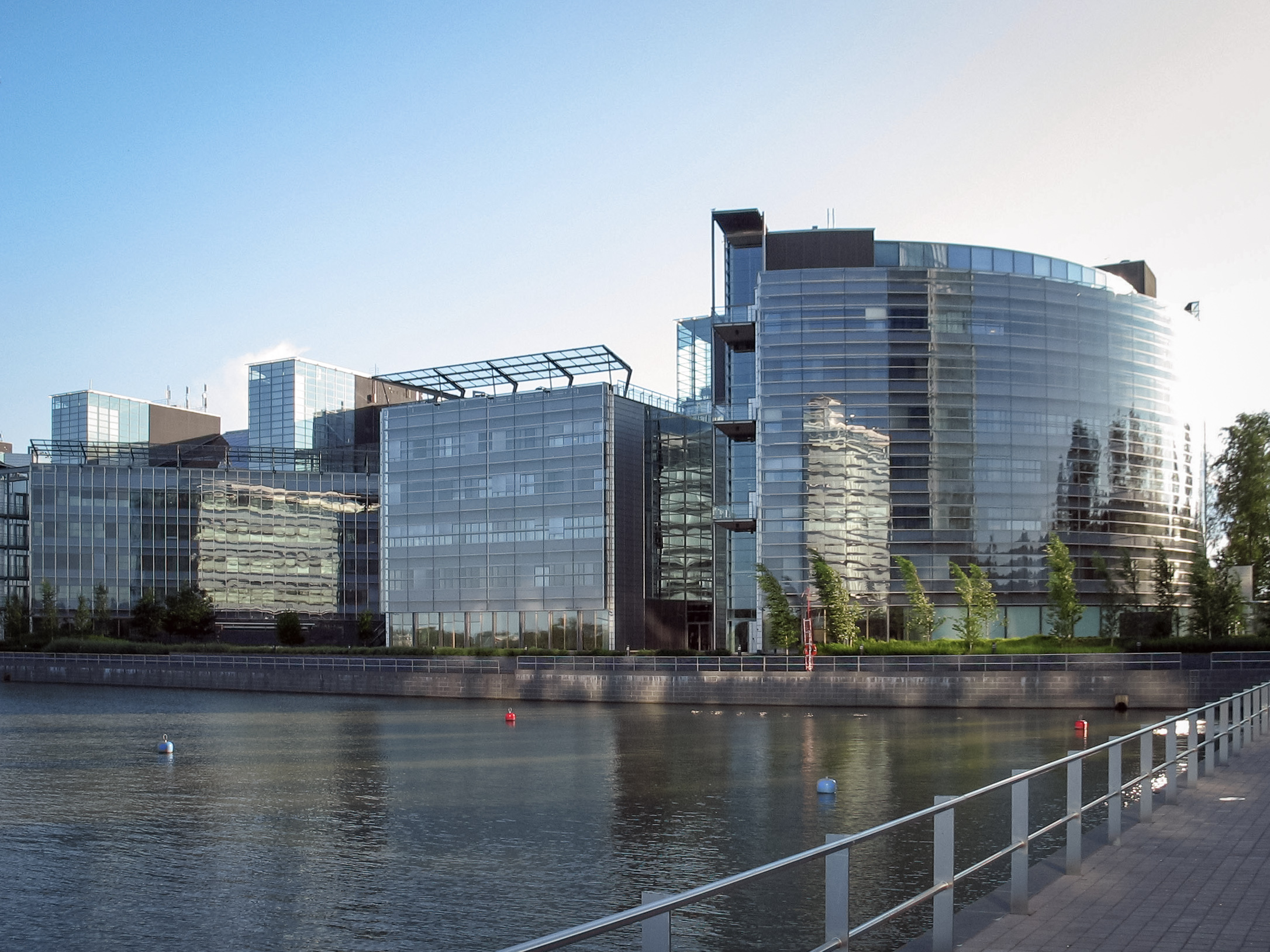
To close this work, Finland played an important role to the security of the Russian Empire in XIX century, besides it has a huge intellectual and ideological development, which easily could compete with other European powers. All of this is result of the great autonomy the country had under Russian dominance, autonomy that led the country to be the first European nation in giving the vote to women, led Finland to develop industries as important nowadays as Nokia; same development that made of Finland nowadays one of the most prosper nations economic, politic, educative and socially.


[1] Ganivet, op. cit., p.16.
[2] Klinge, op. cit., p. 87.
[3] Ibidem., p. 104.
[4] Sumner, op. cit., p. 105.
[5] S.A., op. cit, p. 20.
[6] Sakari Saarikivi, “El arte moderno”, en V.V.A.A., Finlandia, ayer y hoy, Madrid, Espasa-Calpe, trad. Alfonso Reta y Felipe Ximénez de Sandoval, 1973, p. 154.
[7] Klinge, op. cit., p. 105.
[8] Ganivet, op. cit., p. 139.
[9] Elias Lönnrot, Kalevala, Madrid, Alianza Editorial, prol. Agustín García Calvo, trad. Joaquín Fernández y Úrsula Ojanen, 2004, p. 34.
[10] Klinge, op. cit., p. 70-72.
[11] Ibidem., p. 72.
[12] S.A., op. cit., p. 19.
[13] Runeberg, op. cit., p. 6.
[14] Juva, op. cit., p. 66.
[15] Ganivet, op. cit., p. 66.
[16] Ibidem., p. 14-15.
[17] S.A., op. cit., p. 32.
[18] S.A., Finlandia Hymni, (DE 7 de octubre de 2011, 08:01 p.m., en http://www.suomifanit.com/pages.php?page=laulukirja) text translated from Finnish by Anahí Sandoval: Oi nouse, Suomi, nosta korkealle/pääs' seppelöimä suurten muistojen,/oi nouse, Suomi, näytit maailmalle/sa että karkoitit orjuuden/ja ettet taipunut sa sorron alle,/on aamus' alkanut, synnyinmaa.